Learn HTML and CSS
HTML gives your pages structure and CSS makes them look right, together they're where every web project starts. These are the courses worth taking for both, from across the major platforms.
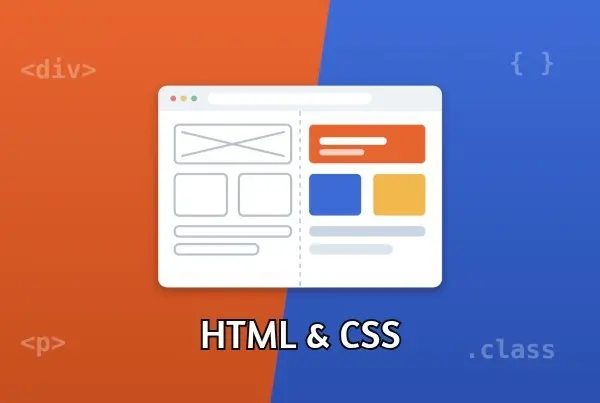
The full front-end foundation, HTML and CSS learned together, the way they're always used.
- Highest rated 4.8on Udemy
- Latest course updateJul 2026
- 1-37 hours across courses
- 5 certificates available
- 5 courses
- Beginner
Where a bare HTML page turns into something worth looking at.
- Highest rated 4.8on Coursera
- 2-35 hours across courses
- 5 certificates available
- 5 courses
- Beginner
The first language of the web, where plain text turns into an actual page.
- Highest rated 4.7on Udemy
- 3-11 hours across courses
- 3 certificates available
- 3 courses
- Beginner
Where to start with HTML and CSS
Everything a visitor sees on a web page is HTML and CSS. The structure, the layout, the colors, the spacing all come from those two. HTML lays out what's on the page, CSS decides how it looks, and together they build a finished site. No programming logic required. That's what sets them apart from everything else in web development. You can put a real, working page online on your first day, well before you've learned to program.
Learn the two together. You rarely write one without the other, so splitting them just slows you down. Whatever you learn from, make sure it covers the parts that matter. That means semantic HTML, the box model, flexbox and grid for layout, and responsive design. It should have you building actual pages, not reading about them. CSS especially has changed a lot lately. Layout that once needed hacks and workarounds now takes a few lines, so favor recent material over anything more than a couple of years old.
Can you build a website with just HTML and CSS?
Yes, and plenty of live sites run on nothing more. Think portfolios, landing pages, documentation, and small business sites. Anywhere the content sits still instead of reacting to the visitor, these two do the job. What you can't build yet is interactivity. That means forms that answer back, content that updates live, and anything that changes after the page loads. That's JavaScript's job, and it comes next. Until you need it, these two build a fast, clean, good-looking site on their own. You'll know the exact moment you've outgrown them. That moment is your cue to add JavaScript, not evidence you did anything wrong.
Where HTML and CSS can take you
Learning HTML and CSS is the first step toward working on the web. Here's where it leads.